
School exam support in Australia is increasingly shaped by the NDIS. More students are receiving help during exams due to NDIS-funded diagnoses for conditions like autism, anxiety, and ADHD.
This includes extra time, scribe access, and separate rooms, all tailored to the student’s disability needs. While this reflects growing inclusivity, concerns remain about unequal access and systemic strain.
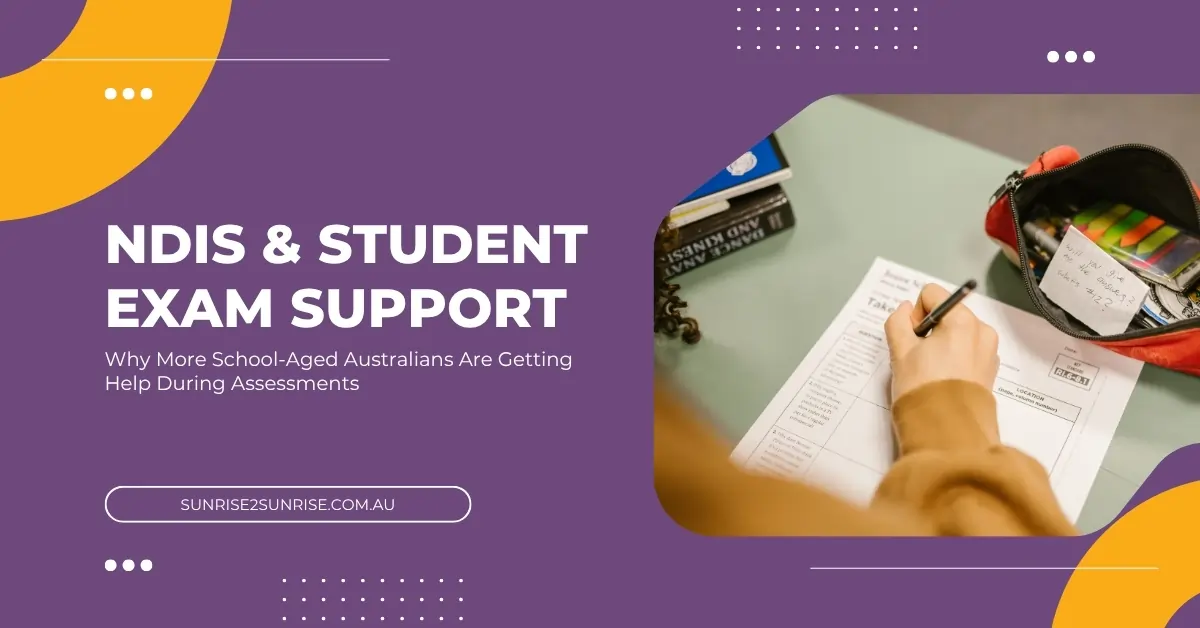
• Mental health awareness and neurodevelopmental conditions (like ADHD, autism, and anxiety) are major drivers.
• NDIS funding enables access to psychologists, occupational therapists, and educational support.
• Schools are adapting exam accommodations like extra time, separate rooms, and assistive technology.
• The shift raises critical questions around equity, diagnosis thresholds, and education system readiness.
What is NDIS-Driven Exam Support for Students?
NDIS-driven exam support refers to education accommodations provided to students whose disability-related needs are recognised and funded by the National Disability Insurance Scheme.
These supports are based on formal diagnoses, typically for conditions such as autism spectrum disorder, ADHD, anxiety, or learning difficulties.
It is not simply extra coaching or tutoring, the assistance is educationally and medically substantiated, often involving professionals like psychologists, speech pathologists, or occupational therapists who help secure documentation for exam adjustments.
Why Are More Students Getting Exam Support Through NDIS?
The increase in students receiving exam support is primarily due to more children obtaining NDIS-funded diagnoses, especially for hidden disabilities.
The number of students flagged as needing educational adjustments has grown nationally. According to ACARA, all states have recorded a consistent rise over the last decade.
What Role Does Mental Health Play in This Trend?
Rising awareness and destigmatisation of mental health has contributed to more students seeking diagnoses and support.
Parents and schools are increasingly identifying signs of anxiety, trauma, or neurodivergence that impact learning. The NDIS funding structure incentivises formal assessment, which unlocks access to exam accommodations.
Example Supports:
- Specialist letters recommending adjustments
- NDIS-funded therapy reports
- Functional capacity assessments
This evolution reflects not only changing educational norms but also systemic adjustments driven by NDIS logic.
What Kinds of Exam Adjustments Are Being Made?
Common NDIS-enabled adjustments include:
- Extra time
- Reader/scribe assistance
- Rest breaks
- Small group or separate rooms
- Computer access for handwriting difficulties
- Enlarged or colour-adjusted papers
- Alternative formats (e.g., verbal instead of written)
These supports aim to provide equal opportunity, not an unfair advantage, and are determined through functional assessments aligned with NCCD (Nationally Consistent Collection of Data on School Students with Disability).
How Do Schools and the NDIS Collaborate?
Schools collaborate with parents, allied health professionals, and NDIS support coordinators to plan and implement exam accommodations.
This usually involves:
- Collecting diagnostic and therapy reports
- Submitting evidence to school panels or exam authorities
- Customising support plans through ILPs (Individual Learning Plans)
The NDIS does not directly fund educational services but supports the underlying capacity-building therapies that justify those services.
What Are the Challenges and Criticisms?
There’s growing concern about the system being skewed towards families who can afford timely assessments or navigate the NDIS efficiently.
Issues Include:
- Equity gap between diagnosed and undiagnosed students
- Strain on school resources for implementing accommodations
- Misunderstanding of support as “unfair advantage”
- Oversupply of “exam help” leading to perceptions of overdiagnosis
Experts warn that without universal support models, students without formal diagnoses may be left behind despite similar needs.
FAQs
Can the NDIS fund an exam directly?
No. The NDIS doesn’t fund tutoring or school services, but it supports the diagnosis and capacity assessments that justify educational adjustments.
What conditions qualify a student for exam support?
Conditions like autism, ADHD, dyslexia, anxiety, PTSD, and physical impairments often qualify, provided they’re linked to functional limitations in learning.
How can parents access exam help through NDIS?
Start with an allied health provider (e.g. OT, psych) for assessment. Their reports can be submitted to the school for formal adjustments.
Does every NDIS child get extra exam time?
No. Exam supports depend on individual functional needs, not just diagnosis.
Is Sunrise2Sunrise involved in exam planning?
While Sunrise2Sunrise doesn’t handle exams, our Recovery Coaching and Support Coordination services help families access the right providers to plan and secure school-based support.